
F1 shows the danger of software powertrains
The Bahrain Grand Prix was held in Malaysia but that is a historical oddity for a future trivia question along with “who is the only driver to win a world championship in a car of his own design”.
The race is also notable for a high profile exposure of what I’ve previously called software powertrains – replacing shafts, gearboxes and even differentials with software equivalents. This is progress, inasmuch that when programmed correctly such software powertrains have the potential to massively outperform conventional mechanical versions.
But the phrase “programmed correctly” is the key. If the programming isn’t done right, and specifically doesn’t account for every possible condition, then at best performance will suffer and at worst a situation becomes needlessly dangerous.
I believe we saw this in 2024 with the crash of the Lotus Evija at Goodwood, after which my video on the subject was deleted by YouTube and Lotus performed a written hit-job on the driver concerned. The Evjia has four motors, IWD or individual wheel drive, a system I have praised for its potential to perform but still with the risk of unexpected consequences.
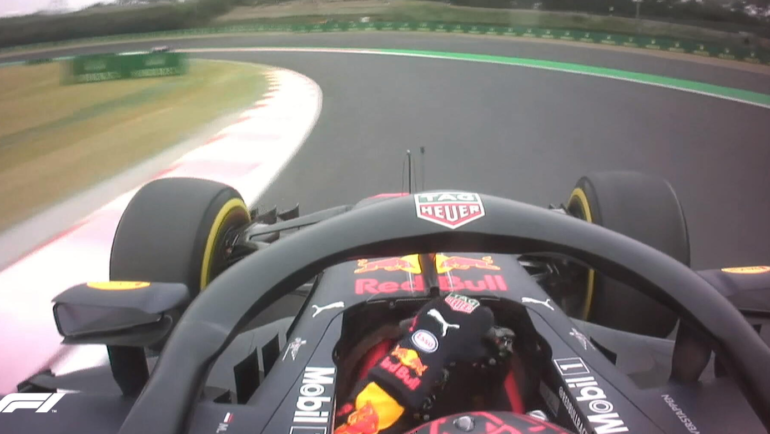
So now to the Bahlaysia race. For background, the 2026 F1 cars are plugless hybrids, and when the electric motor is at max power there is a near 50/50 ICE/electric power split. It’s not true 50/50 per the marketing and only when the electric motor is at full power. The battery is also quite small, unable to deliver full power down long straights. This had led to all manner of interesting driving techniques but that’s a tangential matter for another time. The main point is that there is a complex interplay between battery charging, use of ICE, and use of electric for the F1 cars, which is regulated by the FIA, designed by the team, and controlled by the driver.
The part of the software regulated by the FIA limits electric power to 350kW in dry conditions and 250kW some areas in wet conditions, and it was wet. The F1 cars were circulating behind the safety car, so going very slowly. As they went through Turn 9 the software shut off the electrical power to the car, but that then had the effect of also shutting down the ICE because teams had previously used a qualifying trick to get additional electrical power over one lap. So, some drivers were left with no power at all until their cars were rebooted.
If that sounds complicated, well it is. The summary is a software powertrain wasn’t sufficiently tested and led to multiple racecars losing power.
It gets better. The FIA realised this and rushed out a software fix in 20 minutes. Anyone that’s ever done any software engineering will now be having conniptions because they’d know how risky a hotfix is in these situations.
Now translate this to roadcars. As we move to software powertrains sometime, somewhere, someone will discover an edge case, a combination of factors leading to a rare situation and that’ll cause a problem. I don’t think there’s any way to completely solve this, just mitigate through testing, monitor, and react as quickly as possible when problems are found. There are billions of cars driving billions of kilometers so even if the chances are 0.000001 that translates to a probability of 1 (#FermiParadox).
But I’m not calling for a return to mechanical linkages. For every crash software powertrains cause, I’m sure they will avert many more. Same argument for driverless cars, yes they will do stupid things from time to time, but you won’t see reported all the times driverless cars saved humans from themselves. The net result will be a road safety improvement, and over time, the systems will improve. Human nature won’t.
What we do need is regulatory oversight for the modern car as carmakers have limited experience in critical-systems software design and limited incentive to do the job properly, and this covers not just driving system problems like the F1 race but also security engineering. And not just mitigation, but monitoring, disclosure and post-event mitigation.
If you want to read more about the F1 Bahlaysia problem check out The Race which has an article that provided the basis of the tech explanation.